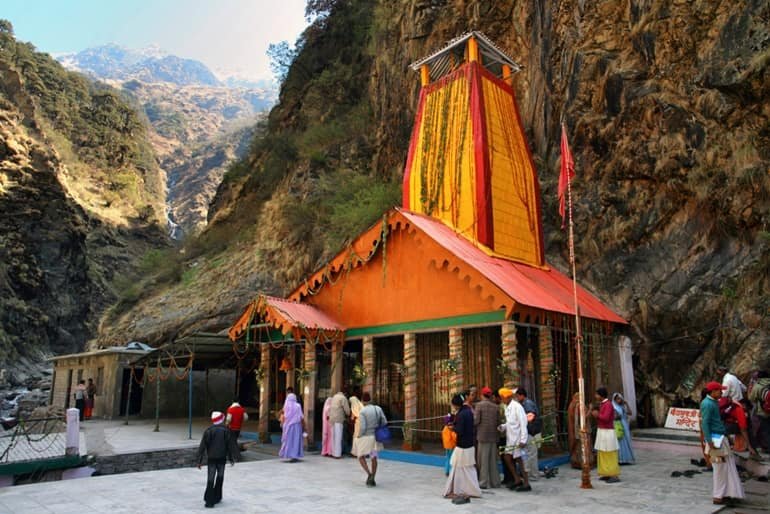
🌄 Yamunotri Dham – Complete Information
📍 Location
Yamunotri Dham is located in the Uttarkashi district of Uttarakhand, India.
It lies in the Garhwal Himalayas at an altitude of about 3,293 meters (10,804 ft).
It is the origin of River Yamuna, though the actual source is Yamunotri Glacier at Bandarpoonch peak (approx. 6 km above the shrine).
🙏 Religious Significance
Yamunotri is dedicated to Goddess Yamuna, daughter of Surya Dev (Sun God) and sister of Yama (God of Death).
Bathing in the sacred waters is believed to:
- Purify one’s soul
- Protect from untimely death
- Remove sins
Table of Contents
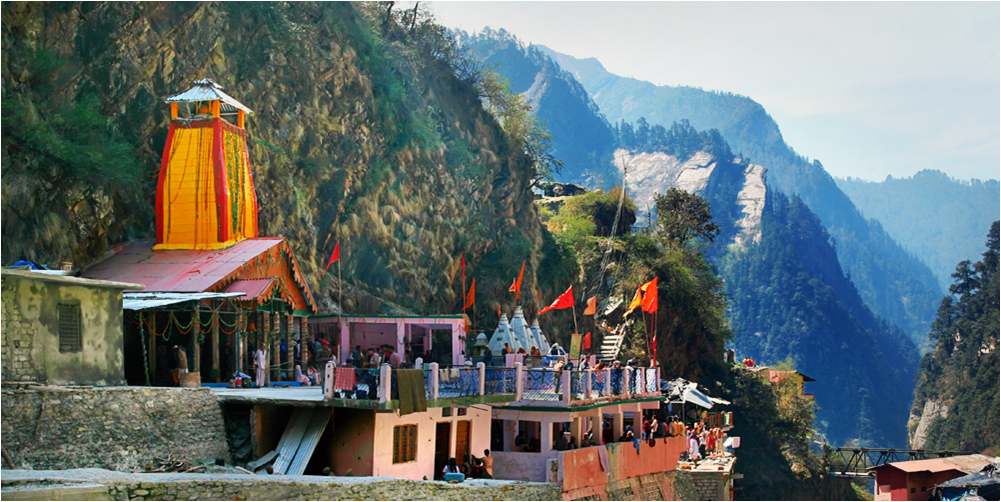
🛕 Main Attractions at Yamunotri
1️⃣ Yamunotri Temple
- Built by Maharaja Pratap Shah of Tehri Garhwal
- Black marble idol of Goddess Yamuna
- Open only from April/May (Akshaya Tritiya) to October/November (Bhai Dooj)
2️⃣ Surya Kund (Hot Water Spring)
- Extremely hot spring (water can boil rice)
- Devotees cook prasadam (rice/potatoes) tied in cloth
3️⃣ Divya Shila
- A sacred rock near Surya Kund
- Devotees worship this before entering the temple
4️⃣ Yamunotri Glacier
- Actual source of River Yamuna
- Located near Bandarpoonch Mountain
- Difficult to reach for normal pilgrims
🚶♂️ How to Reach Yamunotri
Nearest Town: Janki Chatti
All pilgrims start trekking from here.
Trek Details
- Distance: 5–6 km from Janki Chatti
- Difficulty: Moderate
- Options:
- Trek on foot
- Pony/Horse
- Palki/Doli
- Helicopter services available to Khoddu / Barkot region (seasonal)
🛣️ Connectivity
- Nearest Airport: Jolly Grant Airport (Dehradun) – ~210 km
- Nearest Railway Station: Dehradun / Rishikesh
- By Road:
- Haridwar → Rishikesh → Barkot → Janki Chatti → Yamunotri
🏨 Where to Stay
Stay options available at:
- Janki Chatti
- Hanuman Chatti
- Barkot
Includes budget hotels, lodges, GMVN guest houses.
📅 Best Time to Visit
- May to June – best weather
- September to October – calm & beautiful
Avoid monsoon (July–August) due to landslides.
🌦️ Weather
- Summer: Pleasant (10–20°C)
- Winter: Very cold (below 0°C), temple remains closed
🎒 What to Carry
- Warm clothes
- Raincoat (weather unpredictable)
- Trekking shoes
- Medications
- Identity proof
🪔 Important Rituals
- Darshan of Divya Shila
- Bath (or sprinkle) in Surya Kund
- Offerings (prasadam cooked in hot spring)
- Yamuna Aarti in the morning & evening
🧭 Nearby Attractions
- Hanuman Chatti
- Kharsali village
- Barkot
- Dodital Lake (trek)
Sure! Here is more detailed information about Yamunotri Dham, including history, mythology, trekking details, opening/closing dates, and travel tips.
🌸 Yamunotri Dham – Advanced & Detailed Information
🕉️ 1. Mythological Importance
According to Hindu scriptures:
Origin of Yamuna
- Goddess Yamuna is the daughter of Surya Dev (Sun God).
- Her mother is Sangya, who could not bear Surya’s heat and had to leave him.
- The river represents patience, purity, and calmness.
Relation with Yama (God of Death)
- Yamuna is the sister of Yama.
- It is believed that bathing in the holy Yamuna protects from untimely or painful death.
Connection with Sage Asit Muni
- Asit Muni lived near Yamunotri and bathed in the Ganga and Yamuna every day.
- When Ganga changed course, Yamuna appeared at his ashram to ensure he did not face difficulties.
🛕 2. Yamunotri Temple Architecture
- Built in 19th century by King Pratap Shah of Tehri.
- Temple is made of granite stones with a pagoda-style roof.
- Idol: Black deity idol of Goddess Yamuna.
- Temple also houses idols of Ganga Devi and Hanuman Ji.
🔥 3. Hot Water Kunds (Springs) at Yamunotri
🔸 Surya Kund
- Temperature: 90–95°C
- Used to cook rice and potatoes, which become prasadam.
🔸 Gauri Kund
- Comparatively cooler
- Pilgrims dip their feet here before visiting the temple.
🏔️ 4. Trek Details (Janki Chatti → Yamunotri)
| Point | Distance | Highlights |
|---|---|---|
| Janki Chatti | Start | Base point, hot springs, ponies available |
| Phool Chatti | 1 km | Scenic waterfalls |
| Hanuman Chatti | 3 km | Midway rest point |
| Yamunotri Temple | 5–6 km | Final destination |
Trek Features
- Steep, zig-zag mountain paths
- Beautiful waterfalls
- River flowing along the path
- Concrete trekking route
Trek Modes
- Walking
- Pony: ₹1500–2500
- Doli/Palki: ₹3000–5000
- Pitthu (porter): ₹800–1500
(Prices vary by season)
⛰️ 5. Actual Source of Yamuna – Saptrishi Kund
- Located 10–12 km above Yamunotri temple.
- High-altitude lake (4,421 m).
- Surrounded by rarest Brahma Kamal flowers.
- Trek recommended only for experienced trekkers.
📅 6. Opening and Closing Dates (General Pattern)
🟢 Opening:
- Akshaya Tritiya (April/May)
- In 2025, expected opening in early May (exact date announced in April).
🔴 Closing:
- Bhai Dooj (October/November)
- Idol is moved to Kharsali Village for winter worship.
🕌 7. Winter Seat of Yamunotri – Kharsali Village
- Known as the Oldest Village in Uttarakhand.
- The idol of Goddess Yamuna is kept here during winter.
- Traditional rituals continue for the entire winter season.
🚗 8. Route Map (Haridwar to Yamunotri)
- Haridwar
- Rishikesh
- Narendra Nagar
- Chamba
- Tehri
- Dharasu Bend
- Barkot
- Janki Chatti
- Yamunotri (trek)
Total distance: ~225–240 km
🧳 9. Yatra Budget (Approx.)
Low Budget
- ₹4,000 – ₹6,000 per person (2–3 days)
Comfort Budget
- ₹8,000 – ₹12,000 per person
With Helicopter
- ₹15,000 – ₹25,000+
🍽️ 10. Food Availability
- Pure vegetarian food only
- No eggs, meat, or alcohol allowed
- Popular foods:
- Maggi, Paratha, Dal-Chawal, Tea, Pakodas
- Prasadam: Rice cooked in Surya Kund
🛍️ 11. Things to Buy
- Rudraksha
- Woolen clothes
- Temple Prasad
- Local organic herbs
- Pahadi Rajma, Mandua flour
⚠️ 12. Safety Tips
- Carry woolens even in summer
- Start trek early morning
- Avoid monsoon season
- Wear good trekking shoes
- Keep raincoat & water bottle
- If you have asthma/heart problems: consult doctor
📸 13. Best Spots for Photography
- Trek route waterfalls
- Temple surroundings
- Surya Kund steam clouds
- View of Bandarpoonch peak
🌱 14. Environmental Guidelines
- Don’t throw plastic
- Use dustbins
- Maintain silence inside temple
- Respect nature and local culture
Of course! Here is even deeper, richer, and highly detailed information about Yamunotri Dham—covering geography, science, culture, rituals, hidden places, costs, local life, and everything else.
🌟 Yamunotri Dham – Complete Encyclopedic Information
🏔️ 1. Geographical & Geological Details
✔ Altitude
- 3,293 meters (10,804 feet) above sea level.
✔ Mountain Range
- Part of the Garhwal Himalayas.
- Located at the western end of the majestic Bandarpoonch Massif (6,316 m).
✔ Terrain
- Steep rocky hills
- Dense forests of pine, birch, and deodar
- Hot springs due to geothermal activity
- Snow-covered peaks almost throughout the year
✔ Climate
- Summer (May–June): 10°C to 18°C
- Monsoon (July–August): Rainy, landslides common
- Autumn (Sept–Oct): Cool & scenic (7°C–15°C)
- Winter (Nov–April): –5°C to –15°C (Temple closed)
🕉️ 2. Spiritual & Scriptural Importance
✔ Mention in Ancient Scriptures
Yamunotri and River Yamuna are mentioned in:
- Skanda Purana
- Brahma Purana
- Rig Veda
- Mahabharata
✔ Importance of Yamuna
- Yamuna is believed to carry the purity of the Sun God.
- Bathing in Yamuna water protects one from untimely death, due to her relation with Yama Dev.
✔ Divine Legends
- Yamuna agreed to flow on Earth for the welfare of mankind.
- Sage Asit Muni performed daily penance here.
- According to belief, taking a dip in Surya Kund gives the blessings of Surya Dev through Yamuna.
🛕 3. Temple Details & Daily Rituals
✔ Temple Construction
- Reconstructed multiple times due to earthquakes & snow damage.
- Current structure was restored by the Maharani of Jaipur in 20th century.
✔ Idols Inside Temple
- Main idol: Goddess Yamuna (black stone)
- Other idols: Ganga Devi, Hanuman, Yamraj
✔ Daily Puja Schedule
- Morning Aarti: Around 6:00 AM
- Evening Aarti: Around 7:00 PM
✔ Special Rituals
- Divya Shila Puja – mandatory before temple entry
- Surya Kund Prasad – rice/potatoes tied in muslin cloth, cooked in hot spring
- Tarpan – for ancestors
- Ganga-Yamuna Sangam Mantra Path
🔥 4. Hot Water Springs – Scientific & Spiritual Details
✔ Surya Kund
- Temperature: 90–95°C
- Very high sulfur content
- Steam constantly rises
- Used for prasadam
✔ Gauri Kund
- Warm spring
- Used for quick washing of hands & feet
✔ How It Works Scientifically
- Hot springs are formed due to geothermal heat and underground volcanic activity.
- Water gets heated at great depth and rises upwards.
🏞️ 5. Complete Trek Description (Meter-by-Meter)
⭐ Trek Start: Janki Chatti (2,650 m)
- Last motorable point
- Shops, medical facilities, ponies, palkis available
🚶 1 km – Phool Chatti
- Waterfall
- Good place for photography
🚶 3 km – Hanuman Chatti (Not to confuse with main town)
- Tea stalls
- Resting point
🚶 5–6 km – Yamunotri Temple
- Beautiful rocky path
- Railings for support
- Water streams along the road
⏱ Trek Time
- Walking: 2–3 hours
- Horse: 1 hour
- Doli: 1–1.5 hours
❄️ 6. Saptrishi Kund & Yamunotri Glacier
✔ Saptrishi Kund
- Real source of River Yamuna
- Altitude: 4,421 meters
- Dark bluish lake surrounded by rare Brahma Kamal flowers
- Tough trek (requires guide)
✔ Bandarpoonch Glacier
- Major glacier feeding the Yamuna
- Also called Yamunotri Glacier
🏘️ 7. Nearby Historical & Cultural Places
✔ Kharsali Village
- Winter home of Goddess Yamuna
- Ancient wooden Shani Temple
- Oldest village of Uttarakhand (believed)
✔ Hanuman Chatti Town
- Starting point of many treks
- Calm riverside location
✔ Barkot
- Best place for staying
- Himalayan scenic viewpoints
✔ Dodital Lake
- Birthplace of Lord Ganesha (as per belief)
- Trek from Hanuman Chatti
🚌 8. Transportation Details
✔ Nearest Airport
- Jolly Grant Airport (Dehradun) – 210 km
✔ Nearest Railway Station
- Dehradun
- Rishikesh
✔ Bus Services
- Regular buses from Haridwar → Rishikesh → Barkot
✔ Helicopter Services
- Available from Dehradun (Sahastradhara Helipad)
- Drops near Barkot or Kharsali
- Cost: ₹15,000–₹25,000 (round trip approx)
🏨 9. Stay Options by Budget
✔ Budget
- GMVN guesthouse
- Dharamshalas
- ₹800–₹1,500 per night
✔ Mid-Range
- Hotels in Barkot & Janki Chatti
- ₹1,500–₹3,000
✔ Luxury
- Limited near Yamunotri
- Barkot offers premium tents & resorts
- ₹4,000–₹8,000
🍲 10. Food & Cuisine
✔ Available Food
- Pahadi Rajma
- Mandua ki Roti
- Kadhi-Chawal
- Aloo-Puri
- Maggi, Paratha, Tea
✔ Restrictions
- No alcohol
- No non-veg
- No eggs
🛍️ 11. Local Products to Buy
- Woolen caps, shawls
- Rudraksha
- Local herbs
- Himalayan salt
- Wooden handicrafts
⚠️ 12. Important Precautions
✔ Health & Safety
- Avoid monsoon
- Carry warm clothes always
- Keep raincoat
- Take breaks during trek
- Elderly people should use pony or doli
✔ Altitude Sickness
Symptoms:
- Headache
- Fatigue
- Nausea
Bring: - ORS
- Camphor
- Hydration
🌈 13. Best Time for Photography
- Early morning
- After rains (clear sky)
- Sunset near Janki Chatti
- Snow during early May/late October
🙏 14. Why Yamunotri is First in Char Dham Yatra
The traditional order is:
- Yamunotri
- Gangotri
- Kedarnath
- Badrinath
Absolutely! Let’s go much deeper into Yamunotri Dham, exploring its hidden spiritual aspects, sacred geography, pilgrimage experience, mystical legends, and the inner meaning of the rituals.
🕉️ Yamunotri Dham – In-Depth & Mystical Details
🏔️ Sacred Geography & Spiritual Energy
Yamunotri is not just a physical location, it is a spiritual field of energy (Shakti Sthal):
- Glacial source of Yamuna: The glacier itself is considered alive, representing purity, austerity, and eternal flow of life-energy.
- Mountains surrounding Yamunotri: Act as a natural energy boundary, concentrating the spiritual vibrations.
- Altitude & Climate: The cold, crisp air enhances mental focus, deep meditation, and inner reflection.
- Forest & Nature: Dense alpine forests amplify tranquility, making it easier for seekers to detach from worldly distractions.
Yamunotri is essentially a laboratory for spiritual transformation.
🔱 Deity & Mystical Symbolism
- Yamuna Mata: Symbolizes divine consciousness and spiritual purification.
- Hot springs (Surya Kund & Gauri Kund):
- Surya Kund: Named after the Sun God, water is thermally heated by geothermal activity, symbolizes divine energy purifying karma.
- Gauri Kund: Represents Goddess Parvati, enhances devotional energy and feminine Shakti.
Symbolism:
- The river = flow of life, karma, and consciousness
- Pilgrims bathing = surrender to divine flow, release of past karma
🧘 Pilgrimage: A Spiritual Practice
Unlike modern tourism, Yamunotri pilgrimage is a practice of inner discipline:
- Trek from Hanuman Chatti/Janki Chatti:
- Distance: 13–14 km
- Purpose: Body endurance mirrors spiritual endurance
- Along the trek: small shrines, meditation points, and steep slopes test patience and resolve
- Mortal Challenge = Spiritual Challenge:
- Physical fatigue awakens humility
- Cold exposure awakens awareness of mind-body connection
- Trek acts as ritual of karma purification
🔥 Rituals & Mystical Practices
Daily Rituals at Yamunotri Temple:
- Abhishek of Yamuna Mata: Performed with water from Surya Kund
- Lighting of Lamps: Represents illumination of inner consciousness
- Offerings: Rice, flowers, and sweets — symbolic of surrendering material attachments
Mystical Observations:
- Pilgrims often report sudden clarity, visions, or emotional release after bathing or prayer
- The sound of the river and wind is considered divine vibration, aiding meditation
- Staying near the temple fosters psychological purification and calm
🌊 Hot Springs – Beyond Physical Healing
- Surya Kund water temperature: 41–44°C (105–111°F)
- Gauri Kund water: Slightly sulfuric, believed to heal skin diseases and purify energy
- Symbolic meaning: Heat = divine energy burns impurities of mind and soul
🕯️ Yamunotri in the Chota Char Dham Circuit
- First Stop: Prepares mind and body
- Yamunotri = Purification of sins & karmic debts
- Next Stops: Gangotri → Kedarnath → Badrinath
- Each dhams’ sequence is not random, but reflects psychological and spiritual evolution
🌌 Mystical Legends & Experiences
- Pilgrims sometimes report:
- Emotional surges, crying without reason
- Sense of presence of a divine energy around the temple
- Sudden insights or internal visions
- Local legend: Some sages never left, choosing to merge with the energy of Yamuna Glacier
🏔️ Hidden Spiritual Tips for Pilgrims
- Early morning meditation by Surya Kund is extremely potent
- Walking barefoot on parts of the trek enhances energetic grounding
- Avoid distractions, mobile devices, loud conversation — energy is sensitive
- Mental surrender is more important than rituals alone
🌺 Core Spiritual Teaching of Yamunotri
Yamunotri teaches:
- Release the past
- Endure the present
- Trust the divine flow
It is karma purification in its purest form: physical endurance + emotional surrender + ritual observance.
If you want, I can go even deeper into:
- 🔹 The hidden tantric and yogic significance of Surya Kund and Gauri Kund
- 🔹 Yamunotri pilgrimage in the lens of subtle chakras and energy centers
- 🔹 Comparison of Yamunotri, Gangotri, Kedarnath, and Badrinath from spiritual evolution perspective
- 🔹 Step-by-step mystical guide for pilgrims to maximize spiritual benefi